
When Machines Become Generals– Can AI Control the Battlefield?
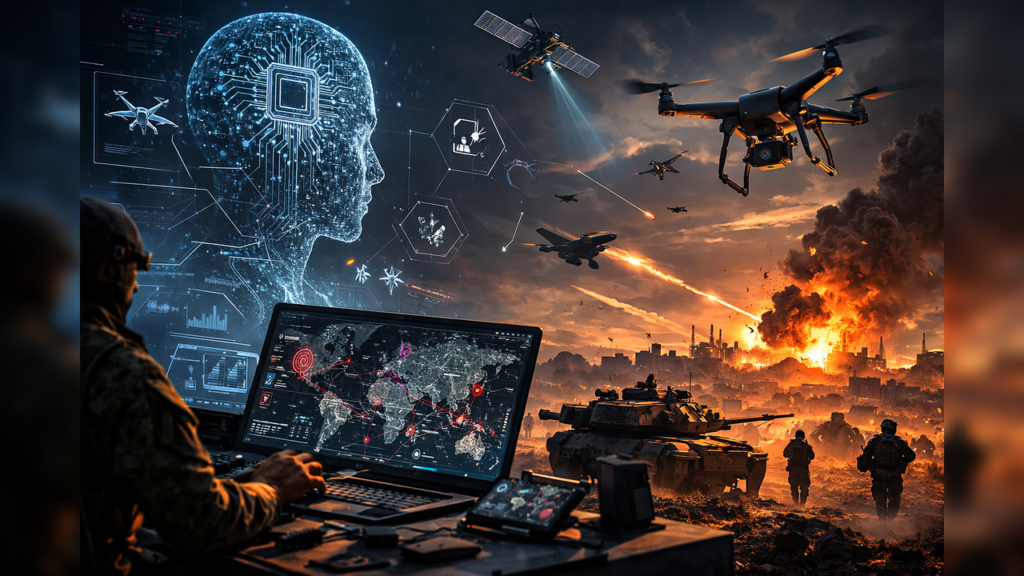
For ages, war’s been run by people. Generals would look at intel, plan stuff, and make the big calls that decided who won or lost. Big-name commanders always used their know-how, gut feelings, and smart thinking to run the show on the battlefield.
But now, with all this new tech, there’s this idea that machines could be military masterminds. Since AI is getting better fast, people are wondering: Could AI actually be a general someday and call the shots in war? AI’s already helping out with military stuff. But as it gets stronger, these AI systems might start making tough choices on the battlefield – stuff that only human commanders used to do.
1. AI's Taking Over Military Strategy
AI can chew through tons of info in seconds. Modern battlefields spit out crazy amounts of data from satellites, drones, radar, and spies. AI can check out this data way quicker than people can.
Here’s what they can do:
- Spot enemy moves
- Look at satellite pics
- Guess attack plans
- Find weak spots in defenses
- Tell you the best way to fight back
Since AI can handle millions of things at once, it could be a great tool for planning military ops. Countries like the US, China, and Russia are throwing lots of money at AI military tech.
2. AI Making Choices in Battle
Right now, AI mostly helps commanders by giving them info and ideas. But future AI could do way more.
Someday, AI could:
- Move troops around automatically
- Run drones all by itself
- Handle missile defenses
- Find important targets
- Change plans on the fly
In a fast-moving fight, AI could make calls in milliseconds – way faster than any human. People say this speed could protect soldiers and make battles run smoother. But letting machines make these big decisions also brings up some worries.
3. AI's Got Speed on Its Side
One big reason the military likes AI is that it’s fast. Human commanders have to get info, think about it, talk about plans, and then give orders. That can take up too much time when you’re fighting. AI can instantly look at what’s happening and suggest what to do.
Like, an AI system could spot incoming missiles and turn on defenses before anyone even sees the danger. This quick reaction could save lives and stop big attacks.
4. Weapons That Think for Themselves and AI Command Systems
AI is also tied to weapons that can run themselves.
Think about:
- Drones powered by AI
- Robot fighting machines
- Surveillance systems that can run on their own
- Drone groups run by computer programs
If these things are hooked up to a main AI system, one program could control hundreds of machines on the battlefield. This would make a new kind of war where machines talk to each other, share info fast, and do planned attacks. With something like that, AI could be like a digital general, telling machines what to do and figuring out what’s happening in real time.
5. What If the Programs Mess Up?
Even though it’s good, AI isn’t perfect. AI uses data, programs, and learning models. If the data’s wrong or not complete, the AI could make bad calls. Like, an AI system might think a regular car is a military vehicle. In a war run by machines, that mistake could hurt people who aren’t even involved.
Another worry is that people might not get how AI systems figure things out.If military choices are made by programs that are hard to understand, it could be harder for commanders to question those choices.
6. Worries About Getting Hacked
AI-run military stuff would need software, networks, and computers to work. That means enemies could try to hack those systems. If hackers took over an AI battlefield system, they could mess up military stuff or turn weapons against us. Computer security people say that protecting AI systems from hackers will be a huge challenge for future wars.
7. Is It Right to Let AI Call the Shots?
The idea of machines making decisions in war brings up some big questions. War isn’t just about plans; it’s also about doing the right thing. Commanders have to think about things like keeping civilians safe, following laws, and being kind.
AI doesn’t really get what’s right and wrong. It just does what it’s told. Groups like the UN are worried about taking human thinking out of big military decisions. A lot of people think that humans should always be in charge of decisions that could cost lives.
8. What's Next for AI and Military Leadership?
AI will probably play a bigger role in war in the years to come. AI might become a great helper for military leaders, helping them look at data and react fast to threats.
But completely replacing human commanders with machines is still a touchy subject.
Some say AI should just help people make decisions, not take over. Others think that future wars might need faster reactions that only machines can handle. The tricky part will be finding the right balance between human control and tech advantages.
Conclusion
AI is changing how we fight wars. As tech gets better, AI systems might be used more to look at intel, plan military ops, and react to threats. The idea of machines being like battlefield generals isn’t just a movie thing anymore – it’s really happening.
But with that power comes big risks. We have to think about mistakes, hacking, and doing the right thing before we let machines have too much control over military decisions. The future of war might be shaped by programs and AI, but we have to make sure people are still in charge.